
Cricket enthusiasts all around the globe are perennially intrigued by pace bowling; it is one of the most electrifying sights in the game. The sheer velocity, aggression, and thrill of a fast moving projectile launched at a batsman in excess of 90 mph (150 km/h). This post is your goto blog to find out everything you need about the world fastest bowler ranking, from records & speedsters today to ICC rankings & T20 wizards. No matter if you’re here for a casual browse or a hardcore fanatic, this comprehensive guide has something for you. In this article, we disscued about World Fastest Bowler Ranking and many more.
Understanding Fast Bowling in Cricket
Fast bowling is the action of bowling in cricket that relies on a player’s ability to make the ball move at high speeds via technique, strength or body mechanics. Fast bowlers are used primarily to cow batters and disrupt their attention with speed, bounce, as well as movement off the ground. Great fast bowlers have defined many memorable scenes of cricket history over the decades. But the emphasis on pace is not just about mph; it’s about control, rhythm and consistency, all of which enable fast bowlers to become match winners.
Read Also: TATA IPL 2026 Player Auction List Announced, Sold Players Reveal Major Moves and Eye-Catching Deals
The Definition of the “World Fastest Bowler”
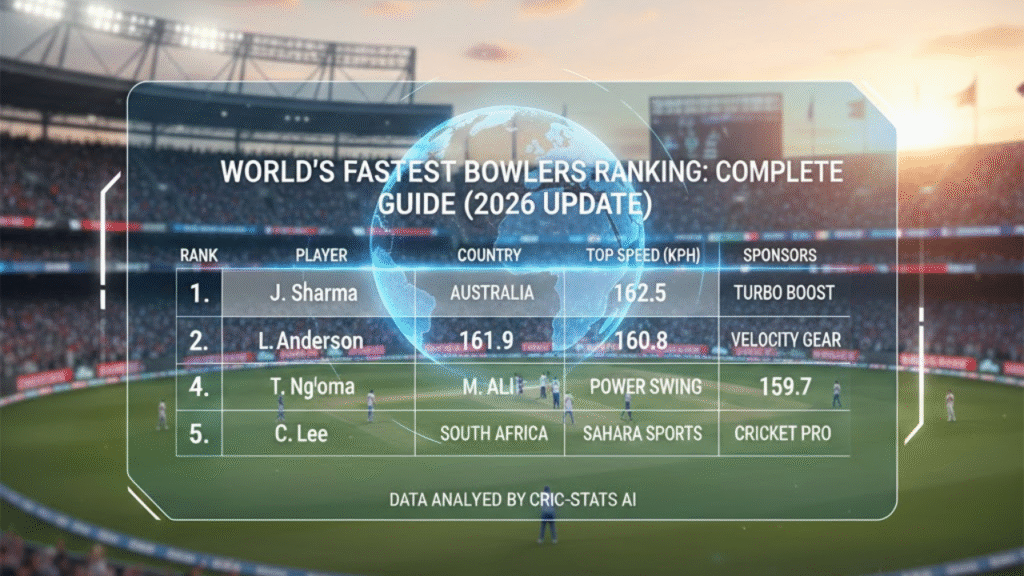
The speed of a bowler is usually calculated using a speed gun, which records the pace of the ball. The fastest bowler ranking in the world is usually determined based on the quickest recorded delivery in international games (Tests, ODIs or T20S). Such a record is only valid at the international level and other high levels of the sport.
Top 10 Fastest Bowlers in the World (All-Time)
Not all lists are created equal, though: To some extent, they take into consideration pace throughout games and opponent impact. But in terms of pure speed, the top 10 is relatively stable:
| Rank | Bowler | Country | Top Speed |
| 1 | Shoaib Akhtar | Pakistan | 161.3 km/h |
| 2 | Brett Lee | Australia | 161.1 km/h |
| 3 | Shaun Tait | Australia | 161.1 km/h |
| 4 | Jeff Thomson | Australia | 160.6 km/h |
| 5 | Mitchell Starc | Australia | 160.4 km/h |
| 6 | Andy Roberts | West Indies | 159.5 km/h |
| 7 | Fidel Edwards | West Indies | 157.7 km/h |
| 8 | Mitchell Johnson | Australia | 156.8 km/h |
| 9 | Mohammad Sami | Pakistan | 156.4 km/h |
| 10 | Shane Bond | New Zealand | 156.4 km/h |
These pacers are legends not just for their speed, but also for their ability to deliver under pressure in the sport’s biggest matches.
Shoaib Akhtar (Pakistan) - 161.3km/h (2003)
Shoaib Akhtar, who is popularly known as the “Rawalpindi Express,” has the world record for the fastest ball bowled in cricket, which he managed to accomplish in the 2003 ICC World Cup when it was 161.3 kmph. His super speed, fiery run-up and killer attitude meant that he was one of the most feared fast bowlers in history. Akhtar’s game was more than just speed; he came complete with vicious bouncers and deadly yorkers that had the best of batsmen shivering in their boots. Injuries marred his career, but when he was healthy, Shoaib was unplayable. His figures are unsurpassed and form the yardstick against which all raw fast-bowling speed is judged.
Brett Lee (AUS) – 161.1 km/h
With the great pace, exceptional line and length, Brett Lee became one of the most complete fast bowlers cricket has ever seen. His quickest delivery of 161.1 km/h indicates, if aplomb is needed, how athletically powerful and smoothly actioned he was. Unlike most other express pacers, Lee was able to bowl long spells in Test matches as well as the shorter formats. He was a notable weapon in Australia’s dominant era, particularly at World Cups. His control, angle and sportsmanship gave him master of the genre status in an era when pace was worshipped.
Shaun Tait – 161.1 km/h
Shaun Tait is one of the quickest bowlers cricket has ever seen, equaling Brett Lee with a 161.1km/h strike-rate. Famous for his slingy action and raw pace, it’s all about speed rather than movement or swing. He was unfortunate not to have a longer international career, but he left his mark in limited-overs cricket. Hitters frequently found it difficult to adjust to his delivery, which was delivered late and fast. Tait showed that just expressing pure speed at a batsman could intimidate him and consequently change the dynamic of a game in the space of a few deliveries.
Jeff Thomson (Australia) - 160.6 km/h
Jeff Thomson was a 1970s batsman’s nightmare, sending down thunderbolts clocked at accuracies of more than 160.6 km/h. His unusual action, lethal bounce, and hostility made him almost unplayable. Back then, with no helmets or modern safety equipment, Thomson’s speed seemed especially perilous. With Dennis Lillee, he formed one of the most fearsome bowling combinations in history and defied batsmen around the world. Thomson’s pace, precision and menace reinvented fast bowling in Test cricket, established Australia as a factory of genuinely express fast men, with an enduring legacy still trembling through the game more than 40 years later.
Mitchell Starc (Australia) – 160.4 km/h
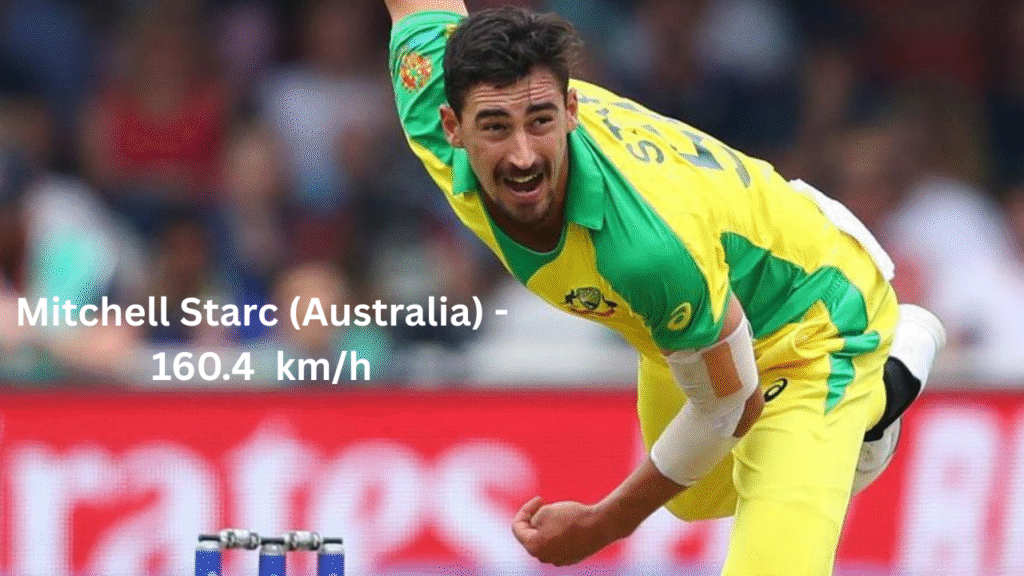
The piece explains: “By reaching a top speed of 160.4 km/h with the ball, Starc has become the fastest left-arm bowler in cricket’s history — and a rarity among top quicks.” And the bringer of raw pace coupled with late swing and deadly yorkers. When it comes to limited-overs cricket, especially in World Cups, Starc has always been the one who is hot on victory’s heels. With few exceptions, his workload and fitness have kept him fresh where many express bowlers have not. With his pace, accuracy, and swing he is considered as one of the most dangerous fast
Andy Roberts (Windies) - 159.5 km/h
One of the pioneers of West Indian fast bowling domination, Andy Roberts bowled just as quickly as he did cunningly also – his speed is estimated to have been about 99mph (159.5 km/h) and was a master at altering its rhythm marginally to outwit batters. He was part of the team that created one of the world’s greatest pace batteries, which dominated world cricket for more than 10 years. Ability to terrorize yet control made him a complete fast bowler. The aggression, yet tactical genius which was Roberts’ influence inspired generations of West Indian pacemen to come.
Fidel Edwards, West Indies – 157.7 km/h
Fidel Edwards Fidel Edwards was as fast (157.7 km/h) and awkward an experiment with international cricket that one could possibly make, given the opportunity to bowl from one end or in front of a petrol station with rusted rollers rolling over it.Whippy action helped him extract steep bounce out of placid pitches and angered top-order batsmen. In the one-day iso-phone both, Edwards was its most successful exponent; short and curly first overs; a few bursts of pace or venom broke wickets through pressure. He was occasional erratic, but West Indies were a side in transition and his raw talent and pace made him an asset. For Edwards showed that raw pace, intelligently applied, can still be a game-changer in modern cricket.
Mitchell Johnson (Australie) – 156.8 km/h
Mitchell Johnson wasn’t just quick but mean, bowling rockets of up to 156.8 km/h: he tore England apart in the 2013-14 Ashes series with one of the most brutal fast-bowling tours de force ever witnessed in Test cricket. As a bowler, Johnson mixed pace, bounce and swing with such an intimidating body language that was enough to make (batter). Unlike some of the young speedsters growing up, he developed his game and became more accurate and strong between the ears. His knack for landing them gave him a batter-defying quality that made him one of the match-winners across formats, and an essential peg in Australia’s fast-bowling tradition.
Mohammad Sami (Pakistan) – 156.4km/h
Mohammad Sami was one of Pakistan’s quickest bowlers too‚ nudging 156.4 km/h at the peak of his speed. Recognized for his searing pace and ability to reverse-swing the ball, Sami was a lethal customer on his day. He was a bowler capable of bother batsman with late movement and extra bounce, especially in the subcontinent. Lack of consistency held him back from sustained success but his sheer speed made him one of the best express pacemenof his generation. Sami’s career was a testament to Pakistan’s long history of developing organic fast bowlers, pacemen who were able to bowl with extreme speed without resorting to too much effort.
Shane Bond (New Zealand) – 156.4 km/h
New Zealand‘s quickest bowler was also Shane Bond who clocked 156.4 km/h and had good control despite his pace! Unline a lot of express pacers Bond wasn’t just about pace, he had control, could swing the ball ,and employed clever variations as well. Injuries derailed his career, but when health,y he was almost unplayable. Bond inspired all round and was even more lethal in one-day internationals; there was no limit of overs that could curb him, if given early wickets he finished games very soon. His no-nonsense attitude and technical accuracy earned him respect in a generation of fast bowlers that he was part of, as well as from current New Zealand pacemen.
World Fastest Bowler Speed – How It’s Calculated
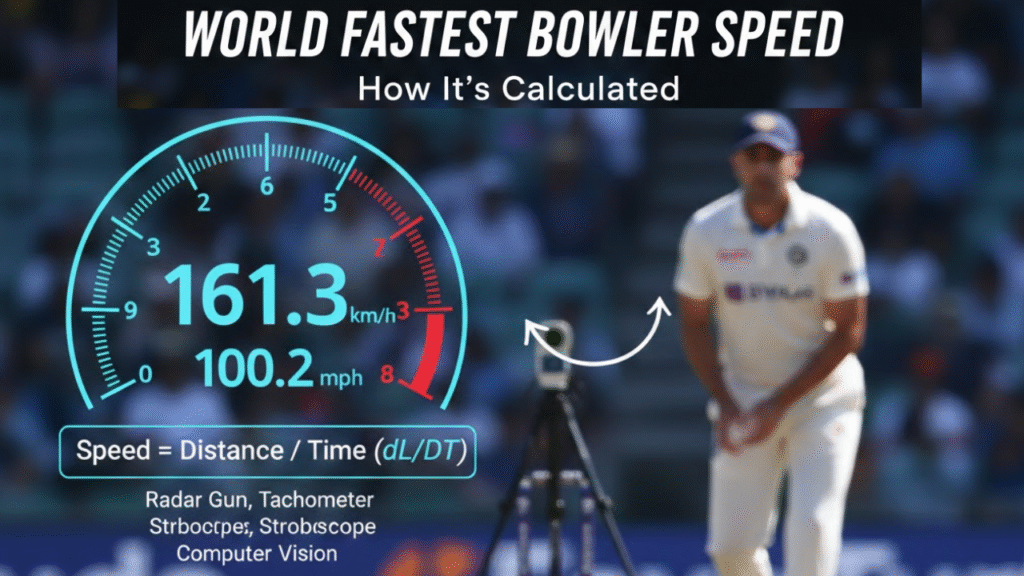
These are the systems that have been developed for counting and recording of delivered legal deliveries by each bowler in an innings (i.e., number of balls bowled). Speed guns Technical device used during coverage of international cricket to measure delivery speed. They do this by measuring the ball’s velocity from the pitcher’s release until it hits something — for accuracy and official speed records. The best performance is typically the fastest a bowler has ever bowled. But that average speed over spells is a massive part of consistency and usefulness.
Fastest Or Quickest Bowlers In The World
If we limit ourselves to the top three in terms of their highest recorded speed, it’s as follows:
- Shoaib Akhtar (161.3 km/h) – He remains the unrivalled speed king.
- Brett Lee (161.1 km/h) – One of the world fastest bowlers from Australia.
- Shaun Tait (161.1 km/h) – A speed demon when he was on the park.
The three are among the fastest bowlers in history, frequently bowling in excess of that 100 mph mark, a rarity in cricket.
World Fastest Bowler Ranking All time (2025)
With retired legends hogging the all-time fastest list, pace stars leave their mark still. Even in 2025, a number of bowlers routinely hit high speed markings:
- Other notable bowlers Mitchell Starc (Australia) - One of the quickest fast bowlers in action, regularly exceeding 145 km/h and reaching 150+.
- Lockie Ferguson (New Zealand) – Bowls consistently at over 150kmh, a treat for T20 and ODI fans.
- Jofra Archer (England) – Pacy and bouncy in all formats.
- Mayank Yadav (India) – Bowled at 156.7 km/h in the IPL, one of the quickest deliveries in recent domestic cricket.
These speedsters of the day might not have surpassed the all-time record but they continue to embody pace in the modern version of cricket.
The World Fastest Bowler Ranking 2025: What’s Different?
The 2025 picture is still developing. The list of the fastest times ever recorded stays unchanged, but challenging active players are pushing that boundary:
- Starc and Ferguson to bowl with one slip in place Both of these guys operate at a great average speed.
- Mayank Yadav was one of the speediest in domestic and IPL stages.
- T20 leagues worldwide focus on pace for match impact.
Combination of experience (for Starc) and youth (Yadav) brings a glint to the 2025 fast bowling era.
T20 bowler Ranking & World No 1 Bowler T20
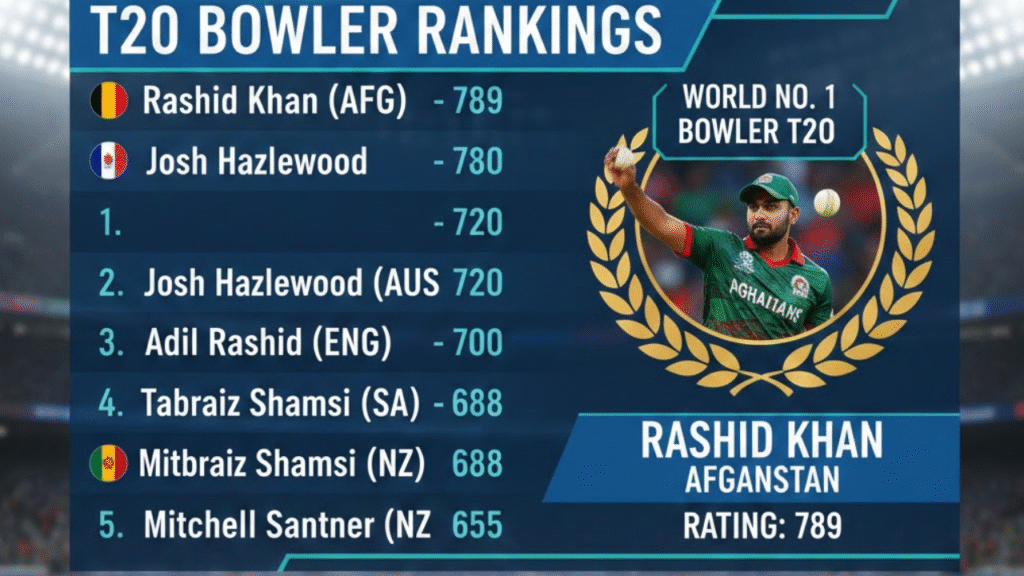
These rankings are not all about speed – though that is important, T20 bowling depends on one’s performance: wickets taken, economy rate and consistency. According to recent ICC data:
- Varun Chakravarthy (India) was ranked the best T20I bowler in 2025.
- Deepti Sharma (India) led the way at the top of the women’s T20I batting rankings
Those rankings are not based on pace, but consistency. But whereas a fast bowler might scare, it is control and versatility that characterise for me a top T20 bowler.
Fast Bowling Still Counts in Cricket’s Checkered New World
Fast bowling holds the key across formats:
- Tests - To take advantage of early pitch conditions and reverse swing.
- ODIs – Of restricting runflow and early breakthroughs in the powerplay.
- T20s – To bowl yorkers and change-ups quickly.
The evolving landscape of cricket has brought in analytics, fitness and biomechanical training into pace bowling, it is responsible for creating fast bowlers that are deadlier and more bankers-per-ball than ever.
Conclusion: The Fast Bowler’s Legacy
Pace bowlers are the most exciting and thrilling cricketers in the game. The world’s ranking includes legends such as Shoaib Akhtar, Brett Lee and Shaun Tait set new benchmark on how the bowling was perceived with their extreme speed. As we follow today’s pacers in 2025, the next generation of speed stars are following in their hoofprints.
There’s no shortage of excitement when you’re watching or playing a blistering yorker at your local ground, nor is the thrill removed from speed guns quickly ticking over in the IPL. The pace lore motivates the next generation to create benchmarks and push thresholds maybe we are about 161.3 km/h short of that ball coming right around the corner!